
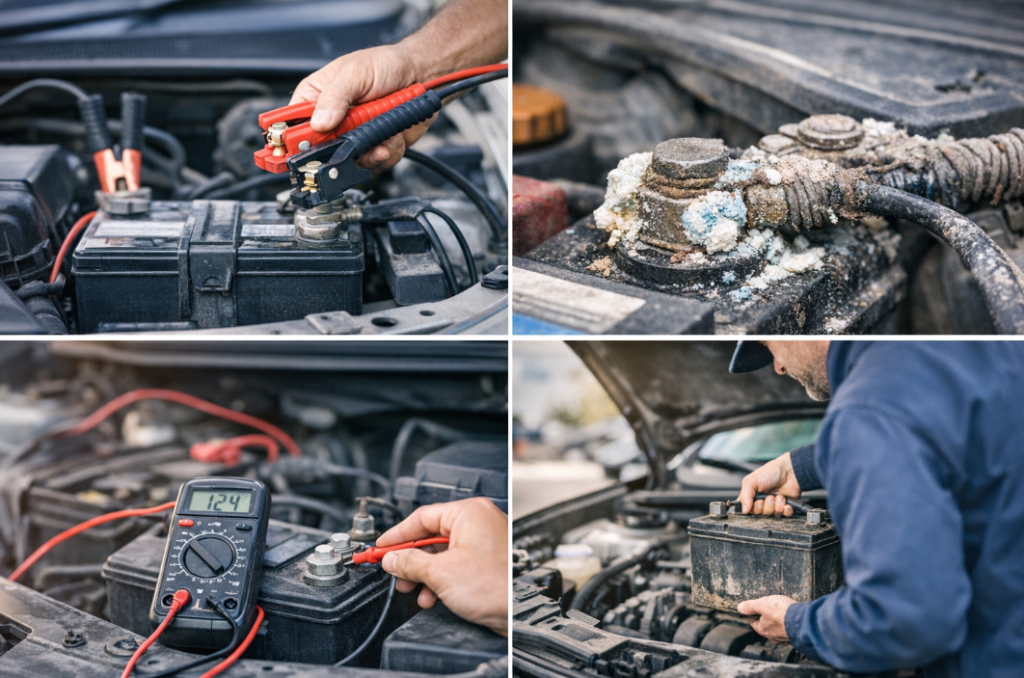
If you are new to car care, battery problems can feel confusing fast. One day the car starts fine. The next day, nothing. Maybe the lights come on but the engine does not turn over. Maybe you notice white or blue stuff around the battery terminals and wonder if that is normal. It usually is not. That is where Battery Basics for Beginners really helps, because once you understand the simple stuff, battery issues stop feeling so mysterious.
A lot of drivers do not think much about the battery until there is a problem. That is pretty normal, honestly. The battery just sits there and does its job in the background, until it suddenly does not. Then it becomes urgent. At Tires2go, many drivers come in with questions about weak starts, battery corrosion, jump starts, and whether the battery still has life left in it. Those are fair questions. Car batteries are simple in some ways, but they can still be a little tricky if you are just learning.
This guide covers Battery Basics for Beginners in a way that is easier to follow. We will talk about what a battery does, how to jump start a car, what corrosion means, the signs of a bad car battery, and when to replace car battery parts before you end up stuck somewhere. If you are looking for a real beginner guide to car batteries, this is a good place to start.
Call Us Today

What Does a Car Battery Actually Do?
Before getting deep into Battery Basics for Beginners, it helps to know what the battery actually does.
A car battery gives the vehicle the electrical power it needs to start. It also helps power lights, locks, electronics, and other systems. Once the engine is running, the alternator takes over much of the electrical work and helps recharge the battery.
In simple terms, the battery helps with:
- starting the engine
- powering dashboard lights
- supporting electrical systems
- helping accessories work when the engine is off
- stabilizing voltage in the vehicle
That is why a weak battery can show up in different ways. It is not always just a total no-start situation. Sometimes the warning signs are subtle at first.
Why Should Beginners Learn Car Battery Basics?
Learning car battery basics can save you time, stress, and maybe even money.
It helps you understand:
- why the car may not start
- what corrosion means
- when a jump start may help
- when a battery is too far gone
- how to spot battery warning signs early
A lot of people assume every no-start issue means the battery is dead. Sometimes that is true. Sometimes it is not. But knowing the basics helps you make better guesses before panic sets in. And, I think, it makes you feel a little more in control too.
That is a big reason Battery Basics for Beginners matters. It gives you enough knowledge to spot common problems without making things more complicated than they need to be.
What Are the Signs of a Bad Car Battery?
One of the most useful parts of Battery Basics for Beginners is learning the signs of a bad car battery before it fails completely.
Some common car battery warning signs include:
- slow engine cranking
- clicking sound when turning the key
- dim headlights
- dashboard battery warning light
- weak power to electronics
- needing jump starts more often
- engine struggles to start in the morning
These are also common dead car battery symptoms, especially when they keep happening. One rough start once in a while may not mean the battery is done. But when the same issue shows up again and again, the battery should probably be checked.
At Tires2go, this is usually when drivers start asking if the battery is just low on charge or already failing. That is an important difference.
Why Is My Car Battery Dying?
This is one of the most common questions. Why is my car battery dying when the car seemed fine a few days ago?
There are several reasons:
- old battery age
- leaving lights on
- short trips that do not fully recharge the battery
- extreme heat
- alternator issues
- loose or dirty terminals
- parasitic electrical drain
- corrosion interfering with connection
Sometimes the answer is simple. Sometimes not really. A battery can weaken over time without one obvious cause. Florida heat, in particular, can be rough on batteries. People often think cold weather is the main battery killer, but heat can shorten battery life too by speeding up internal wear.
That is why Battery Basics for Beginners should include a little awareness about climate and driving habits. They matter more than people think.
How Long Does a Car Battery Last?
A common beginner question is how long does a car battery last. The honest answer is that it depends, but most car batteries last around three to five years.
Battery life can be affected by:
- weather and heat exposure
- driving habits
- battery quality
- vehicle electrical demands
- how often the car sits unused
- maintenance conditions
Some batteries die early. Some last longer than expected. It is not always predictable. That part can be frustrating. But if a battery is getting close to the three to five year range and the car is starting less confidently, it may be nearing the end of its life.
Understanding that is part of Battery Basics for Beginners too. Age matters, even if the battery still kind of works.
What Are Common Car Won’t Start Battery Problems?
There are a few common car won’t start battery problems that beginners should know.
If you turn the key or push the start button and notice any of these, the battery may be involved:
- no response at all
- rapid clicking noise
- single click with no crank
- weak or slow crank
- flickering dashboard lights
- electrical power but no engine turnover
Now, to be fair, not every no-start is a battery problem. The starter, alternator, ignition system, or fuel system can also be involved. But in many cases, the battery is the first place to check.
That is why Battery Basics for Beginners is useful. It gives you a starting point instead of leaving you guessing at everything all at once.
Call Us Today

How Do You Jump Start a Car Safely?
Learning how to jump start a car is one of the most practical things in a beginner guide to car batteries.
Before you start, make sure you have jumper cables and another working vehicle. Then follow these general steps:
- Park the working car close enough for the cables to reach.
- Turn both vehicles off.
- Connect the red clamp to the dead battery’s positive terminal.
- Connect the other red clamp to the good battery’s positive terminal.
- Connect the black clamp to the good battery’s negative terminal.
- Connect the last black clamp to an unpainted metal surface on the dead car, not the battery terminal.
- Start the working vehicle.
- Wait a minute or two.
- Try starting the dead vehicle.
- Remove the cables in reverse order.
These jump start safety tips matter:
- check the battery for cracks or leaking before jumping
- make sure clamps are connected to the right terminals
- do not let cable ends touch each other
- keep metal jewelry away while working
- follow the owner’s manual when possible
If the car still will not start after a proper jump, the battery may be too weak or there may be another issue.
This is one of the most hands-on parts of Battery Basics for Beginners, and it is worth knowing even if you hope never to need it.
What Is Car Battery Corrosion?
Car battery corrosion is the crusty white, blue, or green buildup you may see around the battery terminals. It can look small at first, but it can create real problems.
Corrosion can interfere with the battery’s connection to the vehicle. That means power does not flow as smoothly as it should. Sometimes the battery is still okay, but the corrosion is blocking the connection enough to cause trouble.
Common signs of corrosion-related problems include:
- slow starting
- flickering electronics
- weak or inconsistent power
- trouble after the car has been sitting
A lot of beginners see corrosion and assume the whole battery is ruined. Not always. But it does mean something needs attention.
What Causes Battery Corrosion?
There are several answers to what causes battery corrosion.
Some common battery terminal corrosion causes include:
- battery acid vapors escaping
- age and wear
- overcharging
- undercharging
- moisture around the battery
- loose battery connections
- terminal material reacting over time
Sometimes it is just a sign the battery is getting older. Sometimes a charging issue is involved too. That is why corrosion should not be ignored, especially if it keeps coming back after cleaning.
Understanding battery terminal corrosion causes is a useful part of Battery Basics for Beginners because it helps explain why the battery may act weak even when it is not fully dead.
How Do You Clean Battery Corrosion?
Learning how to clean battery corrosion is helpful, but safety matters here.
Before cleaning, make sure the vehicle is off. Wear gloves and eye protection if possible. Then:
- disconnect the battery terminals, negative first
- inspect the buildup
- use a battery cleaning solution or a baking soda and water mix
- scrub the terminals gently with a brush
- wipe the area dry
- reconnect the terminals, positive first
- make sure connections are tight
If the corrosion is heavy, if the terminals are damaged, or if the battery case itself looks swollen or cracked, it is better to have it inspected.
This is one of those things that sounds simple, and it often is, but not always. A little caution goes a long way.
How Do You Test a Car Battery?
A big part of Battery Basics for Beginners is knowing how to test a car battery instead of guessing.
A battery can be tested with:
- a multimeter
- a battery tester
- a professional load test
A basic voltage check can give some clues. A healthy fully charged battery often reads around 12.6 volts when the engine is off. If it is much lower, the battery may be weak or discharged. Still, voltage alone does not tell the full story. A battery can show decent voltage and still fail under load.
That is why a proper battery test matters. It helps show:
- state of charge
- ability to hold voltage under load
- whether replacement is likely needed
At Tires2go, battery testing can help clear up a lot of uncertainty. Sometimes the battery only needs charging. Sometimes replacement is the better move.
What Is the Difference Between Battery Charge vs Battery Replacement?
This question comes up a lot. People want to understand battery charge vs battery replacement because those are not the same thing.
A battery may only need a charge if:
- it was drained by lights being left on
- the car sat too long unused
- the battery is still in otherwise good condition
- the test shows it still has decent life left
A battery may need replacement if:
- it fails a load test
- it is several years old and weak
- it keeps dying again
- the case is swollen or damaged
- the terminals are badly damaged
- it cannot hold a charge
This is where how to know if battery needs replacement becomes important. If the battery keeps needing help, that is usually a sign the problem is not just low charge anymore.
Call Us Today

When Should You Replace a Car Battery?
Knowing when to replace car battery issues before getting stranded is one of the smartest parts of Battery Basics for Beginners.
You should think seriously about replacement when:
- the battery is over three to five years old
- the car starts slowly often
- jump starts are becoming common
- battery tests show weak performance
- corrosion keeps returning
- the battery case looks swollen
- there are repeated electrical problems tied to low battery power
A simple car battery replacement guide would say this: if the battery is old, unreliable, and testing weak, replacing it is usually better than waiting for a full failure.
It may feel annoying to replace a battery that still kind of works. I get that. But “kind of works” is often how people end up stuck.
How Do You Know If Battery Needs Replacement?
Let’s make this even more direct. How to know if battery needs replacement usually comes down to a few patterns.
Watch for these signs:
- repeated slow starts
- battery warning light
- frequent jump starts
- age over a few years
- weak test results
- corrosion plus poor starting
- battery cannot hold a charge
A battery that fails once may just be drained. A battery that keeps failing is telling you something. This is where Battery Basics for Beginners can really help people avoid wishful thinking. Sometimes we want the cheapest, easiest answer. But the real answer is just that the battery is worn out.
What Car Battery Maintenance Tips Help It Last Longer?
A few simple car battery maintenance tips can help reduce problems over time.
Helpful habits include:
- check terminals for corrosion
- keep connections tight
- avoid leaving lights on
- drive the car regularly
- have the battery tested if it seems weak
- clean off corrosion early
- make sure the charging system is working properly
These steps are not complicated. That is kind of the nice part. Basic maintenance can go a long way, even if it does not stop every battery issue forever.
At Tires2go, basic battery care often starts with paying attention. Just noticing that the car is cranking slower than usual can make a big difference.
Are Battery Problems More Common in Heat?
Yes, they can be. Heat can be rough on batteries.
High temperatures can:
- speed up fluid loss
- increase internal wear
- shorten battery life over time
- make weak batteries fail sooner
That is why a battery that seemed okay a few months ago may start showing problems during hotter weather. Heat does not always cause immediate failure, but it does add stress.
This is another reason Battery Basics for Beginners should include climate as part of the conversation. Weather changes how batteries age.
What Should Beginners Do First If the Car Will Not Start?
If your car does not start, try to stay calm and go step by step.
A good first checklist:
- check if dashboard lights come on
- listen for clicking or slow cranking
- look for obvious corrosion
- make sure battery terminals are tight
- try a jump start if safe
- get the battery tested if the problem continues
That is not a complete diagnosis for every car problem, obviously. But it is a solid starting point for beginners.
Key Takeaways
- Battery Basics for Beginners helps drivers understand jump starts, corrosion, warning signs, and replacement timing.
- Car battery basics start with knowing that the battery powers starting and supports electrical systems.
- Common signs of a bad car battery include slow starts, clicking, dim lights, and frequent jump starts.
- Dead car battery symptoms do not always mean total failure, but they should not be ignored.
- Learning how to jump start a car is useful, but safety steps matter.
- Car battery corrosion can block electrical connection and cause starting issues.
- Knowing what causes battery corrosion helps you spot problems earlier.
- If you are unsure how to test a car battery, professional testing can give a clearer answer.
- Understanding battery charge vs battery replacement helps avoid wasting time on a battery that is already worn out.
- Knowing when to replace car battery parts can help you avoid getting stranded.
FAQs
What are the first signs of a weak battery?
The first signs often include slow cranking, dim lights, clicking noises, or electronics acting weak during startup.
How long does a car battery last?
Most last about three to five years, though heat, driving habits, and maintenance can affect that.
Can battery corrosion cause starting problems?
Yes. Car battery corrosion can interrupt the connection between the battery and the vehicle.
How do I jump start a car safely?
Follow proper cable order, use correct terminals, and keep the last black clamp off the dead battery terminal. Basic jump start safety tips really matter.
Should I clean battery corrosion myself?
You can, if the corrosion is light and the battery is otherwise in good shape. Use caution and protective gear.
Why does my car keep needing jump starts?
That may mean the battery is weak, old, not charging properly, or there is another electrical issue.
How do I know if battery needs replacement?
If it is old, keeps dying, tests weak, or struggles to hold a charge, replacement is often the better option.
What is the difference between charging and replacing a battery?
Charging restores power to a healthy battery that was drained. Replacement is needed when the battery itself is worn out.
Final Thoughts
Battery trouble can feel a little intimidating at first, especially if you are new to car care. But once you understand the basics, it starts making more sense. That is really the goal of Battery Basics for Beginners. Not to make you an expert overnight, just to help you feel less lost when the car starts acting up.
At Tires2go, drivers often come in with the same kinds of questions. Is it just low? Is the corrosion serious? Do I need a jump, or do I need a whole new battery? Those are normal questions. And usually, with a little testing and a little patience, the answer becomes pretty clear.
If your car has slow starts, visible corrosion, repeated battery trouble, or warning signs that keep coming back, it may be time to stop guessing and get it checked. Battery Basics for Beginners is a good place to start, but real testing is what helps confirm what the battery is actually trying to tell you.
Call Us Today